What happens if the government shuts down?
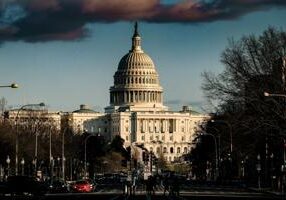
Unless Republicans and Democrats break their negotiations stalemate, the federal government will partially shut down on Oct. 1, furloughing hundreds of thousands of federal employees and halting dozens of services.
A government shutdown occurs if federal agencies run out of money to finance their operations. Under the Antideficiency Act, the government cannot spend money it doesn’t have, so agencies must generally halt their operations until Congress appropriates new money.
Congress is supposed to annually renew agencies’ discretionary spending levels via 12 appropriations bills, but they often run out of time and pass a funding stopgap instead.
House lawmakers have already passed a Continuing Resolution to keep government funding levels on cruise control until November. But Democratic senators prevented the CR from passing the upper chamber and have no plans to relent unless partisan funding concessions are made – concessions Republicans are refusing to grant.
Political betting markets currently peg the chance of a partial government shutdown at above 80%. If that happens, the impacts on everyday Americans will vary widely based on occupation, region, and socioeconomic status.
During a shutdown, federal agencies and operations deemed essential – including national security, law enforcement, Border Patrol, outbreak monitoring, and emergency response – would remain fully open. Despite possible delays, Amtrak rail and airports would still run, the State department would continue processing passports and visas, and the Department of Education would continue administering student aid.
Americans would also continue to receive their mail, Social Security benefits, Medicare, Medicaid, and veterans’ benefits. These services can remain open because the U.S. Postal Service is almost entirely funded by its own revenue and the entitlement programs are funded by mandatory spending, which automatically renews without congressional approval.
But a shutdown would cripple the Food and Drug Administration’s routine food facility safety inspections and the Environmental Protection Agency’s inspections of water systems, chemical facilities, and hazardous waste sites, as well as halt hazardous waste cleanup.
All national parks and museums would close, clinical trials at the National Institutes of Health would see interruptions, and applications for federal housing or small business loans would stall. The supplemental nutrition program WIC would quickly run out of money, and food stamp benefits could be delayed if a shutdown drags on.
Although the Inflation Reduction Act of 2022 provided funds for the Internal Revenue Service to stay open in the event of a shutdown, there is no guarantee this will happen. Under previous shutdowns, the IRS furloughed 90% of its employees, paralyzing operations.
Federal employees in “essential” positions – such as service members and air traffic controllers – would work without pay until the shutdown ends. “Nonessential” government employees – such as Park Rangers and presidents of local EPA offices – would remain furloughed and unpaid until the shutdown ends. At that point, both groups would receive backpay.
The only federal workers who would receive pay throughout a shutdown are those in agencies not funded by Congress, such as USPS workers.
Neither political party would benefit from a government shutdown, which hasn’t occurred in seven years. The most recent lasted from Dec. 22, 2018, to Jan. 25, 2019, the longest shutdown in U.S. history. Republicans were the minority party in the Senate and forced the shutdown, consequently receiving much of the blame. Given that Democrats now occupy that role, a shutdown now would likely harm their party the most.
The stakes are even higher this time around given that the Trump administration is planning to make some of the furloughs permanent if the government shuts down. An Office of Management and Budget memo called on agencies to “use this opportunity” to eliminate agency positions deemed unnecessary.






Mostly Sunny
Latest News Stories
Residents Allege Health Crises, Violations from Peotone Grain Facility
Health Department May Seek Property Tax Increase to Maintain Critical Services
Crete Township Solar Project Approved Despite Township Objections
Health Department Opens Second Breast Milk Depot in Bolingbrook
Lockport Township Solar Farm Gains Committee Approval
Health Department Plans Back-to-School Fair July 12
Meeting Briefs: Will County Land Use & Development Committee for July 3, 2025
Will County Public Health & Safety Committee July 3 Meeting Briefs

Will County Seeks Asian Carp Provision in Federal Legislative Agenda
State Legislative Session Update: Transit, Energy Bills Stall Despite Democratic Control
Will County’s Major Capital Projects Hit Key Milestones, VAC Buildout on “Aggressive Schedule”
County Board Approves 2026-2031 Transportation Plan Despite Project Opposition