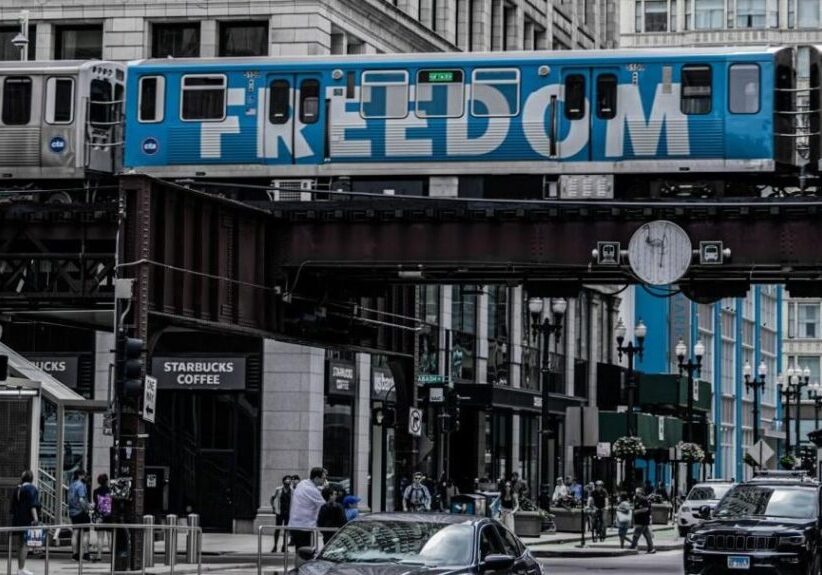
Lawmakers push for transit reform, funding despite delayed fiscal cliff
(The Center Square) – Illinois lawmakers say they hope to pass transit legislation during the fall veto session next month, even though the fiscal cliff is not as near as previously reported.
Four legislators participated in a virtual event hosted by Lincoln Forum and the Union League Club Transportation Subcommittee on Thursday.
State Sen. Seth Lewis, R-Bartlett, said new revenues and Regional Transit Authority transfers have pushed back the estimated $770-million fiscal cliff. Lewis said Pace would not implement a cliff until 2027.
“We have time,” Lewis said.
State Sen. Ram Villivalam, D-Chicago, agreed that the regional cliff had pushed back six months to a year, but he said systemic issues have not changed. Villivalam said a massive fiscal cliff would get worse in 2028 if the issues were not addressed.
Villivalam proposed a retail delivery tax, real estate transfer tax and environmental impact fees in a transit-funding bill that failed to clear the Illinois House before the 2025 spring legislative session ended.
Lewis said there’s no need for a tax increase this fall. He said lawmakers could reform transit governance and save funding for the spring.
“We can start that now. We can get that process going in veto so we can understand our potential cost savings, potential operating costs,” Lewis suggested.
State Rep. Kam Buckner, D-Chicago, said cities grow when they invest in transit.
“In our state, Illinois, Abraham Lincoln made his name not just in courtrooms and cornfields, but he rode the rails. He rode the circuit by train, and he argued for railroads in court. He understood when he ran for the House in 1832, that internal improvements, infrastructure through transportation—it was a different transportation back then—but transportation was how you move a state forward and how you make it a place that people want to live,” Buckner said.
Buckner and Villivalam both predicted that the General Assembly would pass transit legislation during the fall veto session. Villivalam said he wanted legislation to pass, and he did not want to kick the can down the road.
Villivalam said it is inefficient to have four different transit agencies and 21 different appointing authorities.
“It’s not working. We have seven different apps. We have three different service plans, three different capital plans. It’s not where we need to be, and it causing us not to have the efficiencies and meeting the performance metrics that we need to have,” Villivalam said.
State Rep. Brad Stephens, R-Rosemont, said it is important to look to the future. Stephens said the transit situation is not as dire as some people believe.
“We need to have some input from the governance board on how they’re going to find efficiencies before we start throwing a bunch of money at them. You know the billion and a half that’s been talked about? While, yes, it could be needed, we also need to find out what the efficiencies can be and how we can manage this better,” Stephens said.






Slight Chance Showers And Thunderstorms
Latest News Stories

Fifth Circuit hands Texas another win on border security law
Illinois Rep faces investigation over sexual harassment

Frankfort Amends Zoning Code to Update Special Use Permits and Downtown Residential Materials

Talks with Iran to resume

Return on investment questioned as Chicago Red Line construction begins

WATCH: WA Democrat income tax supporter questions ‘necessity clause’ nixing public vote

DOJ to face audit for handling of Epstein files release

ISU strike enters third week; union sues over alleged strikebreaking

Trump extends Jones Act waiver, citing national securit

Trump admin continues to crack down on fraudulent visa schemes

Virginia 1 of 4 in courtroom battles for congressional redistricting

Illinois Quick Hits: State gaming board renew Rockford casino license