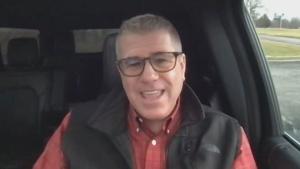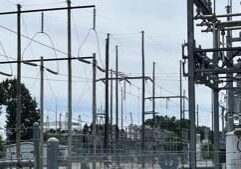
WATCH: Pritzker creates governors group as IL legislators debate increased energy bills
(The Center Square) – Illinois Gov. J.B. Pritzker on Thursday announced the creation of a new group of governors impacted by the PJM energy grid operator, but Republicans say it’s state policies that are driving costs up.
Pritzker’s office announced PJM Governor’s Collaborative, saying its aim is to strengthen state representation in the decision-making process of PJM Interconnection. His office said there are concerns over PJM’s role in driving up electricity costs. Before Thursday’s announcement at an unrelated event, Pritzker criticized the operator.
“PJM is not doing a good job of adding all the renewable energy that we’ve added in the state,” Pritzker said Tuesday. “We’ve tripled the amount of renewable energy in the state from … 5% to almost 20% of the state’s production of electricity.”
During a House Executive Committee hearing Thursday about proposed changes to the state’s energy policy, including tacking on another surcharge to ratepayer bills, driving costs up more, state Rep. C.D. Davidsmeyer, R-Murrayville, said it’s not PJM that’s inflating rates, it’s state policies.
“Republicans have been excluded from a number of these, actually, all of these discussions and a lot of our constituents have been negatively impacted by [Climate and Equitable Jobs Act] and all these other bills,” Davidsmeyer said. “So when we pretend like it’s PJM and [Midcontinent Independent System Operator] that are increasing costs, it’s our current policies that have pushed us in this direction.”
CEJA set the state toward decarbonization with the closure of coal fired power plants by 2045.
State Rep. Ann Williams, D-Chicago, said all states are being impacted by increased costs and they are looking to take that on, and what she said were federal energy policies undermining Illinois’ clean energy programs and “escalating climate crisis.”
“This is really, in light of what we’ve seen, which is a positive in many ways, the technology boom, which has for the first time in 40-ish years, increased demand for energy in an unprecedented way,” Williams said Thursday. “It’s a basic supply demand challenge that we’re all facing.”
Patrick Schweska with the Illinois Manufacturers’ Association said it opposes the legislation because it is going to increase costs on residents and businesses.
“For Illinois manufacturers, this is especially concerning. Our state already has amongst the highest industrial utility rates in the region, adding another charge to increase the cost of every unit of power consumed,” Schweska said. “That would put Illinois at a competitive disadvantage against neighboring states that are aggressively attracting new investment.
Davidsmeyer said instead of focusing on wind and solar energy, the state needs to reverse course and get back to generating baseload power.
“Our current plan is to just import from other states because we’re not allowing our state to actually produce baseload generation.”






Sunny
Latest News Stories
Trump slices China fentanyl tariff in half following meeting with Xi

Trump orders Department of War to begin testing nuclear weapons
WATCH: Tax proposals draw questions from Pritzker and GOP state rep

Illinois quick hits: Former sheriff’s deputy guilty in Massey murder; appeals court intervenes in Bavino case

WATCH: Warnings of higher IL property taxes heard as pension bill advances
Top-selling automaker confirms U.S. investment, but no details yet

Fentanyl poised to take center stage during Trump, Xi meeting
‘Outrageous’: Lawmakers bash Biden admin for targeting, surveilling 156 Republicans
WATCH: Cruz calls on House to impeach federal judge over subpoenas of Republicans
WATCH: Pritzker declares agricultural trade ‘crisis’ while Trump touts new deals

Amnesty International condemns U.S. strikes on suspected drug boats

‘Astonishingly reckless:’ IL Dems intro tax on ‘unrealized gains’ to fund transit

Illinois beef producers say Trump’s Argentina beef plan hurts farmers

WATCH: Expect tax and fee increases for veto; Democrats want more sanctuary policies