Illinois agencies to post monthly investment reports, lawmaker calls symbolic
(The Center Square) – Illinois agencies must now post monthly reports on how taxpayer dollars are invested, a move supporters call a win for transparency, though critics warn it could strain agencies and serve more as political theater than real accountability.
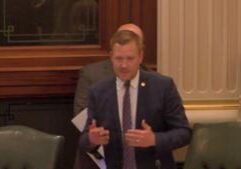
State Rep. C.D. Davidsmeyer, R-Murrayville, cast a present vote on House Bill 1447, describing it as more symbolism than substance.
“A lot of times things like this are really just opportunities for the majority party to pretend like they like transparency and good government,” Davidsmeyer said in an interview. “My present vote was kind of a protest, saying we need to go much, much further. I’m all for steps in the right direction, but everything still happens behind closed doors unfortunately in Springfield.”
The measure directs agencies to post public investment information online each month. But Davidsmeyer argued the data is already available through Freedom of Information Act requests, making the new requirement redundant.
“By next week [after filing a FOIA], they have to provide me with that information anyway,” he said. “This just makes it a little more readily available in a report itself.”
Looking forward, Davidsmeyer suggested stronger enforcement mechanisms, such as penalties for misusing public funds, would better serve taxpayers than symbolic reporting.
Hypothetically, if Department of Children and Family Services places $10 million of reserve funds into a money market account for emergency child welfare services, the agency would be required to update the public online by month’s end, making it easier for legislators and watchdogs to track how taxpayer money is used.
Davidsmeyer said reporting mandates often bog down agencies.
“You look at a local school district, they’ve got so much more administration today than they did 20 years ago, and that’s because of additional reporting requirements. The same thing happens in state government departments. When a Democrat sponsors a bill, the department usually won’t oppose it, even though they know it’s going to be more work,” said Davidsmeyer. “They like to think they can absorb the cost, but after a certain number of new requirements, they end up having to hire more people. Maybe not for just one bill, but as you add this bill and the next bill and the one after that, it really starts to become a burden.”
Davidsmeyer also criticized the Pritzker administration’s overall approach to openness.
“Transparency has actually been horrible for the last six years, especially during COVID,” he said. “Once that communication dropped off, it never really fully returned. To get answers out of the governor’s office or frankly any of the departments, you really have to file a FOIA request, even as a representative.”
He contrasted today’s climate with that of past administrations.
“I’ve worked with Gov. [Pat] Quinn as well as Gov. [Bruce] Rauner,” Davidsmeyer said. “Both were much more transparent than the current Illinois government.”
The bill passed with broad bipartisan support, with only two House members voting “present” while the rest voted in favor. In the Senate, the measure cleared unanimously.






Sunny then Slight Chance Showers And Thunderstorms
Latest News Stories

Small businesses expected to feel pinch as diesel hits $6 a gallon

GOP senators renew calls to nuke filibuster after voter ID bill languishes

Illinois Quick Hits: Four charged in alleged pharmacy burglary conspiracy

LA City Council member seeks to allow noncitizens to vote

Chicago loses 2,100 restaurant jobs as industry fights mandated wage hikes

State Senator, ‘angel parent’ want to let police to work with ICE

U.S. Supreme Court temporarily allows mail-order abortion pills

U.S. Supreme Court declines to hear Washington COVID-19 speech case

‘Project Freedom’ begins, two ships safely transit Strait of Hormuz
Meeting Summary and Briefs: Lincoln-Way Community High School District 210 for April 16, 2026

Supreme Court declines hearing Chicago gun sales case
Meeting Summary and Briefs: Will County Board for April 16, 2026