USDA reverses use of taxpayer dollars to fund solar panels on farmland
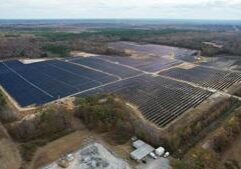
The U.S. Department of Agriculture will no longer subsidize large-scale solar projects placed on farmland or use solar panels manufactured by foreign adversaries in any agency projects, according to a news release Tuesday.
Hundreds of billions of taxpayer dollars have gone towards solar and other “green” energy initiatives since 2022 alone. Roughly 47% of utility-scale solar projects are located on farmland as of 2025, according to Agricultural Economic Insights, and solar panels on American farmland have increased by 50% since 2012, according to USDA.
“Our prime farmland should not be wasted and replaced with green new deal subsidized solar panels,” USDA Secretary Brooke Rollins said. “Subsidized solar farms have made it more difficult for farmers to access farmland by making it more expensive and less available. We are no longer allowing businesses to use your taxpayer dollars to fund solar projects on prime American farmland, and we will no longer allow solar panels manufactured by foreign adversaries to be used in our USDA-funded projects.”
As part of the change, both solar and wind projects will no longer be eligible for the USDA Rural Development Business and Industry Guaranteed Loan Program.
Prospective recipients of the USDA Rural Development Rural Energy for America Program (REAP) Guaranteed Loan Program will only be eligible for the subsidies if their solar photovoltaic systems are smaller than 50kW.
Tennessee will particularly feel the impact of the change as it has lost more than 1.2 million acres of farmland over the last 30 years. Both the Republican governor and U.S. lawmakers, including some representing Tennessee, praised the USDA’s decision.
“Tennessee farmland should be used to grow the crops that feed our state and country, not to house solar panels made by foreign countries like Communist China,” Sen. Marsha Blackburn, R-Tenn., stated. “Secretary Rollins and President Trump are right to put an end to these Green New Deal subsidies that waste taxpayer dollars while threatening America’s food security.”
The move follows the Environmental Protection Agency’s rescission of $7 billion in Solar for All community grants and the Department of Interior’s plans to increase production of more traditional sources of energy like oil and gas.



Sunny
Latest News Stories
Supreme Court to hear migrant farm worker case

Illinois quick hits: Convicted felon suspected of shooting two officers; Chicago Mayor orders up to $900,000 for additional peacekeepers; Belleville man faces attempted murder charge

Lincoln-Way D210 Approves $483,000 Agreement with Illinois Bone and Joint Institute, Adds Seventh Athletic Trainer

Candidates vie for Georgia’s 10th District post
Senate candidates debate healthcare, abortion, stocks

Frankfort Approves Pavlov Media Fiber Optic Hub Lease in Exchange for Municipal Internet Service

Everyday Economics: Housing sets the stage, but the Fed, PCE are the main event

DOJ: Shooting suspect targeted Trump admin officials

23 state AGs demand top ratings agencies explain ESG-driven downgrades

Bacon says Pentagon raided housing fund for troop bonuses, demands repayment

Will County Passes Comprehensive Adult Entertainment Ordinance
Correspondents’ dinner attacker detained with multiple weapons
BREAKING: Trump, cabinet OK after shots fired at White House Correspondents dinner