USDA reverses use of taxpayer dollars to fund solar panels on farmland
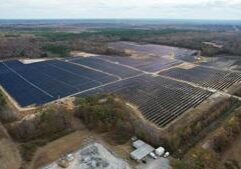
The U.S. Department of Agriculture will no longer subsidize large-scale solar projects placed on farmland or use solar panels manufactured by foreign adversaries in any agency projects, according to a news release Tuesday.
Hundreds of billions of taxpayer dollars have gone towards solar and other “green” energy initiatives since 2022 alone. Roughly 47% of utility-scale solar projects are located on farmland as of 2025, according to Agricultural Economic Insights, and solar panels on American farmland have increased by 50% since 2012, according to USDA.
“Our prime farmland should not be wasted and replaced with green new deal subsidized solar panels,” USDA Secretary Brooke Rollins said. “Subsidized solar farms have made it more difficult for farmers to access farmland by making it more expensive and less available. We are no longer allowing businesses to use your taxpayer dollars to fund solar projects on prime American farmland, and we will no longer allow solar panels manufactured by foreign adversaries to be used in our USDA-funded projects.”
As part of the change, both solar and wind projects will no longer be eligible for the USDA Rural Development Business and Industry Guaranteed Loan Program.
Prospective recipients of the USDA Rural Development Rural Energy for America Program (REAP) Guaranteed Loan Program will only be eligible for the subsidies if their solar photovoltaic systems are smaller than 50kW.
Tennessee will particularly feel the impact of the change as it has lost more than 1.2 million acres of farmland over the last 30 years. Both the Republican governor and U.S. lawmakers, including some representing Tennessee, praised the USDA’s decision.
“Tennessee farmland should be used to grow the crops that feed our state and country, not to house solar panels made by foreign countries like Communist China,” Sen. Marsha Blackburn, R-Tenn., stated. “Secretary Rollins and President Trump are right to put an end to these Green New Deal subsidies that waste taxpayer dollars while threatening America’s food security.”
The move follows the Environmental Protection Agency’s rescission of $7 billion in Solar for All community grants and the Department of Interior’s plans to increase production of more traditional sources of energy like oil and gas.




Showers And Thunderstorms Likely then Chance Showers And Thunderstorms
Latest News Stories
Summit Hill 161 Honors Teacher and Communications Specialist

First Look at Lincoln-Way 210’s Proposed 2026-2027 School Calendar

Meeting Summary and Briefs: Frankfort School District 157-C for October 2025

Frankfort Buried Under 12.6 Inches of Snow; Sub-Zero Temperatures Predicted for Friday
Summit Hill 161 Takes First Step Toward 2025 Tax Levy, Estimates 4.99% Increase

Frankfort Turns to County for Wildlife & Dangerous Animal Control

JJC Foundation Director Kristin Mulvey to Retire After 25 Years of Transformative Leadership
Attack foiled in Ft. Worth day before National Guard troops shot in WDC

Hundreds of flights canceled in Chicago as winter storm wreaks havoc

Lincoln-Way 210 Switches to Under Armour for Athletic Apparel
Frankfort School District 157-C Earns State-Level Governance Award
Crete “Group Care” Home Approved for Senior Living