
Trump orders drug stockpile, increased manufacturing
President Donald Trump ordered administration officials to draw up a list of 26 key drugs to develop a stockpile in the United States.
His executive order provides for a six month supply of the active pharmaceutical ingredients in each drug to be added to the Strategic Active Pharmaceutical Reserve.
“Stockpiling APIs is advantageous as APIs are generally lower-cost and have longer shelf lives than the finished drug products they make,” Trump’s order reads.
“Filling the SAPIR will also insulate the United States from the concentration of foreign, sometimes adversary, nations in the world-wide supply of the Key Starting Materials used to make APIs.”
The first Trump administration established SAPIR to serve as a national stockpile of ingredients for the production of essential medicines. SAPIR is overseen by the Office of the Assistant Secretary for Preparedness and Response.
In President Joe Biden’s administration, ASPR curated a list of 86 medicines deemed “critically needed for acute patient care.”
The Biden administration list included fentanyl for pain relief, HIV treatments like Bictegravir and regular insulin.
Trump’s directive gives ASPR 30 days to create a reduced drug list from the Biden administration’s with a focus on increasing domestic curation of the drugs.
The order follows the U.S. Food and Drug Administration’s announcement last week of the FDA Precheck program which is designed to expedite the drug manufacturing approval processes.
In the announcement, the FDA said 11% of active pharmaceutical ingredients are produced by U.S. manufacturers.
To increase production, the FDA will begin to offer more frequent communication between regulatory agencies and manufacturers in the development of domestic production sites.
“The FDA PreCheck initiative is one of many steps FDA is taking that can help reverse America’s reliance on foreign drug manufacturing and ensure that Americans have a resilient, strong, and domestic drug supply,” said FDA Commissioner Marty Makary.
Trump has also increased pressure on pharmaceutical companies to invest in more domestic production over the past few months.
In July, Trump sent letters to 18 pharmaceutical companies, including Pfizer and Johnson and Johnson, demanding they outline steps to bring down prices of prescription drugs in the United States.
He has also touted billions of dollars in investments from pharmaceutical companies over the last six months including $500 billion from Johnson and Johnson, $50 billion from AstraZeneca and $10 billion from Abbvie.
In what appears to be aligned with the Trump administration’s priorities, Abbvie confirmed part of its investment will go to a $195 million site in North Chicago dedicated to producing active pharmaceutical ingredients in the U.S.
“This is an important step to maintain U.S. leadership in pharmaceutical innovation and deliver next-generation medicines that make a remarkable impact on patients’ lives,” said Robert Michael, CEO of Abbvie.






Sunny
Latest News Stories

White House urges state AGs to target, punish Medicaid fraudsters

NASA unveils $1B moon base push amid cost questions
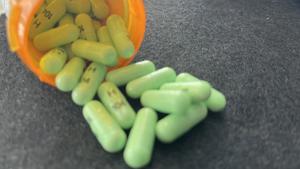
Drug-discount program likely to expand in Illinois, despite lax oversight
Analyst warns Bears megaproject bill could raise taxes

Chicago proposes funding tax rebates with salaries from vacant city jobs

Ceasefire remains in effect as U.S., Iran exchange fire

Illinois news in brief: Prosecutors charge man with using care in attempt to kill cops; Military higher education bill goes to governor; Burrito chain closes locations in Chicago area
Frankfort Board Weighs Higher Substitute Pay Amid Staffing Shortages

Lincoln-Way North to Host TV Pilot Filming Under $210,000 Rental Deal
Frankfort Township Closes Fiscal Year With $2.48 Million General Fund Balance

Analysts: Redistricting to cost taxpayers, while slowly shifting election outcomes

Trump honors fallen service members, vows Iran will not obtain nuclear weapon