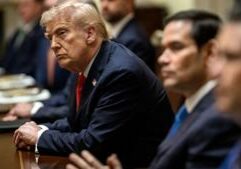
Trump’s proposed $2,000 tariff rebates face costly challenges
President Donald Trump’s plan to send some Americans $2,000 checks from the federal government’s tariff collections is expected to cost more than the import duties will generate.
Trump has said he wants to issue the rebate checks and use the rest of the money to pay down the nation’s $38 trillion debt, even as the Supreme Court has not yet determined whether he has the authority to impose tariffs.
Trump has provided few details about the proposed rebates. He said they would be for low and middle-income Americans, not the wealthy, but has not specified any income limits.
Three different scenarios analyzed by the Tax Foundation estimate that costs of distributing the checks would range from $279.8 billion to $606.8 billion. The scenarios varied according to income limits, single and joint filers and head of household filers.
“Even if all tariff revenues, including pre-existing and new tariffs, went toward rebates, revenue would still fall short,” according to the Tax Foundation report. “Even factoring in the collections that will come in over the remaining three months of the year, tariff money would not pay for even the narrowest tariff dividend option.”
Cato Institute’s Colin Grabow and Clark Packard were less charitable in their called the proposed rebates “pure fiscal fantasy” in a recent op-ed.
“It’s an election-year gambit with obvious political logic,” they wrote. “But little else about this adds up.”
The Committee for a Responsible Federal Budget also said the math doesn’t work, according to its analysis. The group said if the rebates were structured like the COVID-19 stimulus payments, the $2,000 dividend would cost about $600 billion, which is about twice as much as tariffs are expected to generate this year.
Trump would need help from Congress to send the checks out. He has said the checks won’t arrive before Christmas, but could come late next year.
“We’re going to be issuing dividends later on. Somewhere prior to, you know, probably in the middle of next year, a little bit later than that. Of thousands of dollars for individuals of moderate income, middle income,” he said.
Twelve states, five small businesses and two Illinois-based toymakers have challenged Trump’s usage of a 1977 law to impose tariffs without congressional approval. The International Emergency Economic Powers Act doesn’t mention the word “tariff” and has never been used to impose them.
Trump’s legal team argues the law is a clear delegation of emergency power, granting the president broad authority to act in times of crisis.
The Supreme Court is expected to decide the case before the end of June.
Trump has said he wants to use tariffs to restore manufacturing jobs lost to lower-wage countries in decades past, shift the tax burden away from U.S. families and pay down the national debt.
Economists, businesses and some public companies have warned that tariffs will raise prices on a wide range of consumer products.
More recently, Trump exempted 200 food products from tariffs and lifted tariffs on some imports from Brazil, including beef and coffee, in an effort to address cost-of-living concerns. The move came after Democrats swept a series of off-year elections in mid-November.





Chance Showers And Thunderstorms then Slight Chance Showers And Thunderstorms
Latest News Stories
Aging Systems and Judicial Mandates Drive Significant FY2027 Budget Requests for Will County Courts and Sheriff

Meeting Summary and Briefs: Will County Planning and Zoning Commission for May 5, 2026

Colorado governor shortens Tina Peters’ sentence for election tampering

No ruling; Florida judge hears arguments in redistricting litigation
Debate grows over bill on gender, abortion care access in child placement

Lawsuit: D300 secretly gender transitioned student; Seeks to nix IL gender ‘guidance,’ too

WATCH: Family farm’s decade-long water war with Ecology waiting on WA Supreme Court
Trump says tariffs never came up during China trip

Illinois Quick Hits: Report shows 8% of Cook County offenders on electronic monitoring AWOL
Fed funding of pediatrics group questioned over its gender ideology stance
Trump’s ‘historic’ visit to China yields some economic, less geopolitical fruits

GOP congressional candidate calls single-stream recycling a ‘sham’